

What Are Gunning Stops?
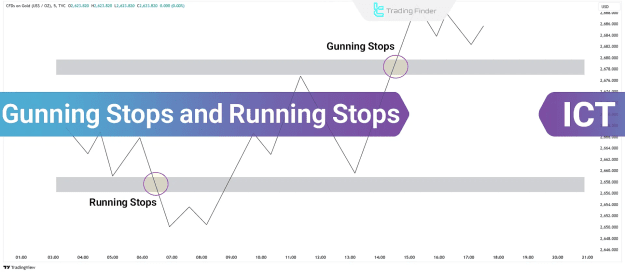
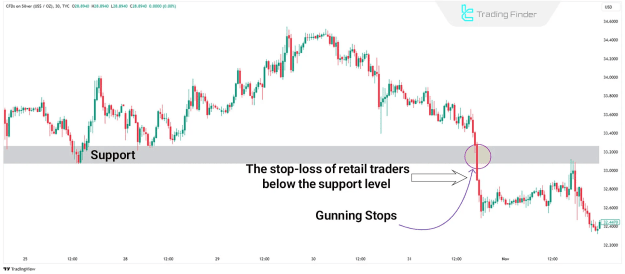
Gunning Stops occur when large financial institutions deliberately push prices toward retail traders' stop-loss levels. This intentional manipulation generates liquidity, often leading to heightened volatility.
How Gunning Stops Work
- Institutions (banks, hedge funds, or "smart money") use substantial trade volumes to drive prices toward key support/resistance levels.
- Retail traders' stop-loss orders are triggered, resulting in forced buying or selling.
- The sudden influx of orders accelerates price movement in the intended direction.
Key Characteristics of Gunning Stops
- Intentional Manipulation – Executed by institutions to exploit retail traders' liquidity.
- Stop-Loss Hunting – The primary goal is to collect liquidity before a larger price move.
What Are Running Stops?
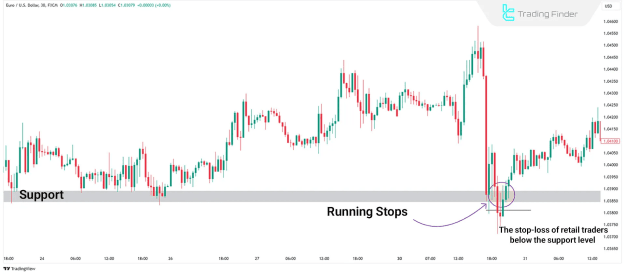
Unlike Gunning Stops, Running Stops happen naturally when prices reach stop-loss levels without institutional manipulation. This occurs due to normal market behavior, high-impact news, or increased trading volume.
How Running Stops Work
- Prices organically approach key levels where stop-loss orders are clustered.
- As stops are triggered, a cascade of orders intensifies the price movement.
- The effect is often short-lived unless aligned with a broader trend reversal.
Key Characteristics of Running Stops
- Natural Market Behavior – Not driven by institutional manipulation but by collective trader actions.
- News-Driven Volatility – Often triggered by economic releases or unexpected events.
Why Understanding These Concepts Matters
Recognizing Gunning Stops and Running Stops helps traders:
- Avoid being trapped in liquidity grabs.
- Identify institutional manipulation versus organic price action.
- Capitalize on reversals following liquidity sweeps.
Final Thoughts
While both Gunning Stops and Running Stops lead to liquidity sweeps, their origins differ. Gunning Stops are strategic moves by institutions, whereas Running Stops emerge from natural market dynamics. Mastering these concepts enhances a trader’s ability to navigate volatile markets effectively.
By integrating this knowledge into your ICT trading strategy, you can better anticipate market movements and refine your risk management approach.