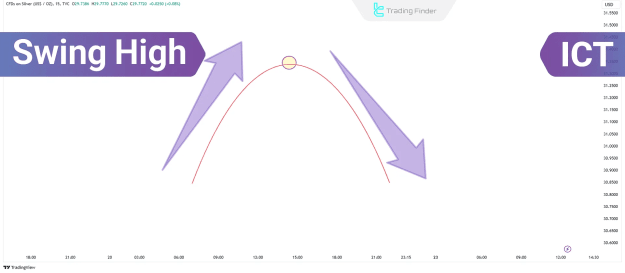


By mastering Swing Highs, forex traders can better anticipate price reversals, identify key resistance levels, and refine their entry and exit strategies—critical skills for success in the dynamic forex market.
The Structure of a Swing High
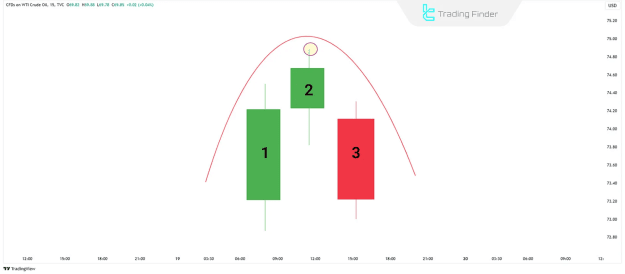
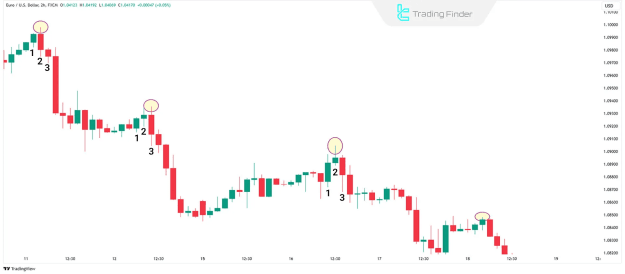
A Swing High typically forms a triangular-like pattern consisting of three candles:
- The middle candle reaches the highest peak.
- The first and third candles have lower highs compared to the middle candle.
This structure signals bearish momentum and is often used to anticipate trend reversals or continuations.
How to Identify a Swing High
Follow these steps to accurately spot a Swing High:
- Locate the Highest Price Point – Identify the peak price level in an upward move.
- Mark the Middle Candle – This candle should have the highest high.
- Analyze Adjacent Candles – The candles before and after must have lower highs.
- Confirm the Swing High – If all conditions are met, the middle candle is validated as a Swing High.
Trading Strategies Using Swing Highs
Swing Highs serve as key resistance zones, and traders can use them to execute strategic entries and exits:
Step-by-Step Trading Approach
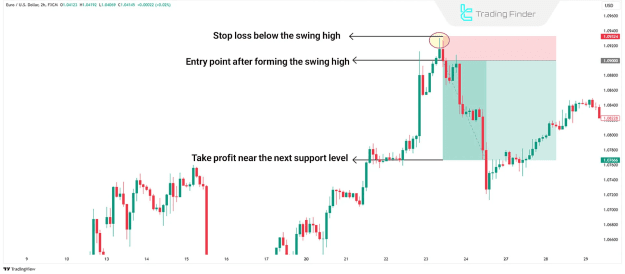
- Spot the Swing High – Look for the pattern near resistance levels.
- Assess the Trend – In a downtrend, a confirmed Swing High followed by a support break signals a sell opportunity.
- Set Stop Loss – Place the stop loss above the Swing High to minimize risk.
- Define Take Profit – Target the next support level for optimal exit points.
Key Applications of Swing Highs in Market Analysis
Swing Highs provide multiple analytical advantages:
1. Trend Analysis & Market Strength
- Lower Swing Highs indicate weakening bullish momentum, suggesting a downtrend continuation.
- Higher Swing Highs confirm an uptrend’s strength, reflecting increasing buyer dominance.
2. Measuring Trend Velocity
The distance between Swing Highs reveals trend intensity:
- Widening gaps suggest accelerating momentum.
- Narrowing gaps signal potential trend exhaustion.
3. Identifying Key Reversal Zones
Swing Highs often mark critical turning points, helping traders anticipate:
- Price rejections at resistance.
- Breakouts or breakdowns in market structure.
Where Do Swing Highs Form?
Unlike Swing Lows, Swing Highs emerge at resistance zones where selling pressure halts upward movement:
- In Uptrends – Indicate temporary pullbacks before potential continuation.
- In Downtrends – Confirm bearish continuation as prices push lower.
Final Thoughts
Swing Highs offer traders a clear, actionable framework to detect trend shifts and optimize entries. By mastering this pattern, traders can enhance their technical analysis skills and improve decision-making in both bullish and bearish markets.
Whether used for identifying reversals, setting stop losses, or gauging trend strength, Swing Highs remain a cornerstone of price action trading strategies.