

Macro ICT Indicator:
Macro ICT Indicator MT4
Macro ICT Indicator MT5
When Do ICT Macros Occur?
These macro intervals commonly appear in 20-minute windows, with particular emphasis on the first 20 minutes of the New York session, although they are also evident during:
- The London trading session
- New York’s morning, midday, and afternoon trading blocks
ICT Macro Times (EST and GMT)
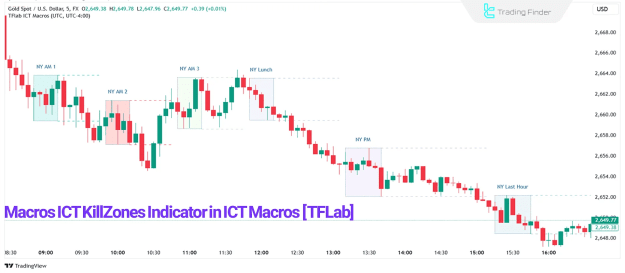
Below are the most recognized ICT macro periods:
- London Macro:
• 02:33 AM – 03:00 AM EST
• 06:33 AM – 07:00 AM GMT - London Macro:
• 04:03 AM – 04:30 AM EST
• 08:03 AM – 08:30 AM GMT - New York AM Macro:
• 08:50 AM – 09:10 AM EST
• 12:50 PM – 01:10 PM GMT - New York AM Macro:
• 09:50 AM – 10:10 AM EST
• 01:50 PM – 02:10 PM GMT - New York AM Macro:
• 10:50 AM – 11:10 AM EST
• 02:50 PM – 03:10 PM GMT - New York Lunch Macro:
• 11:50 AM – 12:10 PM EST
• 03:50 PM – 04:10 PM GMT - New York PM Macro:
• 01:10 PM – 01:40 PM EST
• 05:10 PM – 05:40 PM GMT - New York Final Hour Macro:
• 03:15 PM – 03:45 PM EST
• 07:15 PM – 07:45 PM GMT
Best Timeframes for Trading ICT Macro Setups
Since macro movements occur over short durations, lower timeframes are more suitable for observation and execution.
- Use the 15-minute chart to establish market direction and identify liquidity zones or imbalances
- Drop to 5-minute, 3-minute, or 1-minute charts for precise entries during macro periods
Optimal Trading Times for ICT Macros
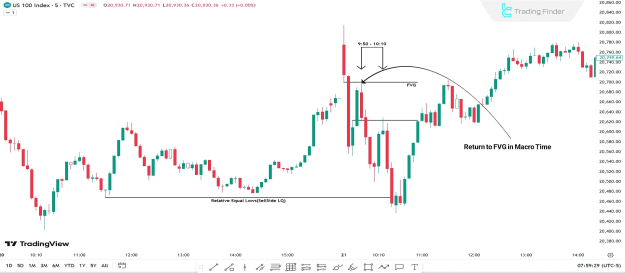
The New York AM Macro, particularly the window from 09:50 AM to 10:10 AM EST, is widely regarded as the most favorable period for trading. This timeframe overlaps with both New York and London markets, offering high volatility and frequent news releases.
Key ICT Macro Periods for High-Probability Setups:
- 09:50 AM – 10:10 AM EST:
Ideal for Silver Bullet setups and post-stop hunt liquidity grabs - 10:50 AM – 11:10 AM EST:
Often used for targeting remaining liquidity zones - 11:50 AM – 12:10 PM EST:
Provides additional liquidity opportunities if prior sessions failed to clear major zones
Note: Avoid trading between 12:00 PM and 1:30 PM EST, a period typically marked by reduced volatility and inefficient price behavior due to the lunch hour.
Daylight Saving Time Consideration
The impact of Daylight Saving Time (DST) on ICT Macros is important:
- If your region does not observe DST, your local macro times may shift by one hour
- If your region follows DST, no adjustment is necessary
- It is recommended to track New York local time as the standard for macro alignment
Recommended Instruments for ICT Macro Strategy
Although ICT Macros were originally tailored for U.S. indices such as NASDAQ (NQ Futures) and E-mini S&P 500 (ES), traders have successfully applied them to:
- Major forex pairs such as EUR/USD and GBP/USD
- Precious metals like Gold (XAU/USD)
Strategy Integration: Enhancing Your System with ICT Macros
ICT Macro Times are not stand-alone strategies but are most effective when integrated into a broader trading system. They are particularly useful in conjunction with:
- Fair Value Gaps (FVGs)
- Market Maker Buy/Sell Models (MMXM)
- Silver Bullet setups (especially when used with a supporting indicator)
Core Trading Objectives During Macro Periods
The primary purpose of trading during ICT Macro Times is to exploit temporary inefficiencies and target zones of high liquidity.
- Identify and monitor liquidity pools, imbalances, and inefficiencies
- Observe price as it rebalances from inefficient areas toward liquidity clusters
- Use return-to-FVG entries within macro periods to capture momentum-driven moves
Conclusion:
Incorporating ICT Macro Times into your trading system can significantly improve your edge in the market. By timing entries during macro windows and aligning with market structure and liquidity flow, traders can position themselves for high-probability trades.
Key Takeaway:
Align your strategy with macro timing and liquidity principles to enhance accuracy and profitability. Use FVGs and MMXM in tandem with ICT Macros for optimal market engagement.