
-
What Is Monetary Policy?
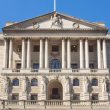
Monetary policy refers to the strategies used by a central bank to regulate the money supply and the cost of borrowing. By adjusting interest rates and other financial levers, central banks aim to keep an economy stable, encourage employment, and keep inflation within a target range. Central banks such as the U.S. Federal Reserve, the European Central Bank, and the Bank of England are responsible for implementing monetary policy in their respective economies. Their decisions affect everything from the cost of a home loan to the flow of money into investment markets, including crypto. What Is Monetary Policy? Monetary ... (full story)
- Comments / Top
- Subscribe
-
Related Stories

TRUMP SAYS IRAN REACHED OUT SEEKING A NEW AGREEMENT
The manager turned first to an overview of market developments during the intermeeting period. Asset prices were affected by a number of factors, including developments related to the conflict in the Middle East, continued solid real economic data, higher inflation data, and ongoing investment in artificial intelligence (AI). Optimism around a near-term resolution of the conflict in the Middle East and the announcement of a memorandum of understanding between the U.S. and Iran pushed the oil futures curve and near-term inflation compensation materially lower relative to levels from the time of the April FOMC meeting. Expected policy rates, Treasury yields, the U.S. dollar, and domestic equity prices all rose. Regarding monetary policy expectations, the manager observed that market participants and respondents to the Open Market Desk Survey of Market Expectations (Desk survey) generally expected no change in the target range of the federal funds rate at the June FOMC meeting. Market- and survey-based measures of expected policy rates moved higher over the intermeeting period. In the Desk survey, the median of the modal paths of the federal funds rate implied no changes in the target range through the beginning of 2027 and one rate cut in the second quarter of next year. Market pricing suggested that one rate hike was priced for mid-2027, but the manager noted that these measures were likely boosted, in part, by term premiums. The manager then discussed inflation expectations. He noted that optimism around the Iran conflict pushed market-based measures of expected inflation significantly lower over the period, leaving near-term inflation expectations only moderately higher than they were before the onset of the conflict. Longer-term inflation expectations remained well anchored near the Committee's 2 percent longer-run inflation objective. Fed: Officials saw the labor market remaining stable in the near term. *FED: A FEW SAW CASE FOR RAISING RATES AT JUNE FOMC MEEETING Fed Minutes: Fed staff forecast for inflation in 2026 and 2027 was higher than in April forecast, reflecting the Middle East war and effects of AI buildout.  FOMC Minutes Show 'A Few' Fed Members Wanted To Hike In June, 'Majority' Fear Higher Inflation Today's FOMC minutes will be scrutinized for further insight into policymakers' appetite for additional rate hikes and the thinking behind the Committee's hawkish shift at last month's meeting. The minutes are an account of the June 17th meeting and therefore will not reflect subsequent developments, including the softer-than-expected June nonfarm payrolls report or Chair Warsh's appearance at the ECB's Sintra Forum. Since the last FOMC meeting (June 17th), the dollar has strengthened (on the hawkishness) and gold (and bitcoin) mirrored that with sizable declines. Stocks are flat, bond yields are higher (prices down), and oil remains lower, but accelerating in the last couple of days...
FOMC Minutes Show 'A Few' Fed Members Wanted To Hike In June, 'Majority' Fear Higher Inflation Today's FOMC minutes will be scrutinized for further insight into policymakers' appetite for additional rate hikes and the thinking behind the Committee's hawkish shift at last month's meeting. The minutes are an account of the June 17th meeting and therefore will not reflect subsequent developments, including the softer-than-expected June nonfarm payrolls report or Chair Warsh's appearance at the ECB's Sintra Forum. Since the last FOMC meeting (June 17th), the dollar has strengthened (on the hawkishness) and gold (and bitcoin) mirrored that with sizable declines. Stocks are flat, bond yields are higher (prices down), and oil remains lower, but accelerating in the last couple of days...
Ms Schnabel started her presentation by noting that, since the Governing Council's previous monetary policy meeting on 29-30 April 2026, euro area financial markets had been torn between two competing developments: the unresolved conflict in the Middle East and the global artificial intelligence (AI) boom. The continued disruption to shipping in the Strait of Hormuz had reinforced expectations that oil prices would remain higher for longer, despite markedly lower near-term oil prices. Inflation fixings had declined from their high April readings but continued to hover above 3% for 2026 and above 2% for 2027. In tandem with oil prices, ECB rate expectations had moderated somewhat. However, markets still priced in around three interest rate hikes overall, while the median response in the ECB Survey of Monetary Analysts was an expectation of only two hikes. Although the war was weighing on growth expectations in the euro area and globally, investors’ risk appetite had remained strong. A key underl ECB ACOUNTS: HEADLINE INFLATION WAS SET TO RISE FURTHER OVER THE SUMMER AND REMAIN WELL ABOVE TARGET INTO THE FIRST HALF OF 2027, DESPITE ALMOST THREE 25 BASIS POINT INTEREST RATE HIKES BEING EMBEDDED IN THE PROJECTIONS ECB ACOUNTS: ALL MEMBERS VIEWED THE RISKS SURROUNDING THE INFLATION OUTLOOK AS BEING TO THE UPSIDE RELATIVE TO THE STAFF BASELINE PROJECTIONS ECB ACOUNTS: IF ENERGY PRICES DID NOT DECLINE AS IMPLIED BY THE FUTURES CURVES, ABOVE-TARGET INFLATION WAS LIKELY TO PROVE CONSIDERABLY MORE PERSISTENT ECB ACOUNTS: MORE ATTENTION WAS LIKELY TO BE PAID TO PRICE RISES NOW THAN AT THE TIME OF THE PREVIOUS ENERGY SHOCK, AND THIS COULD MEAN THAT FIRMS AND WORKERS MIGHT REACT MORE QUICKLY ON THIS OCCASION.
