
-
IMF expects ECB to raise rates by half a percentage point in 2026
The European Central Bank should lift its key interest rate twice this year to combat an energy-driven inflation surge, but should then reverse these moves in 2027, the International Monetary Fund’s European Department chief said on Friday. “Under our reference scenario, we would expect the ECB to raise rates by about 50 basis points in 2026 in order to maintain a neutral monetary stance,” Alfred Kammer, the head of the IMF’s European Department, told Reuters. “Then, in 2027, rates could come down again. If you want to keep the real policy interest rates constant, you would need to increase the nominal ... (full story)
- Comments / Top
- Subscribe
-
Related Stories

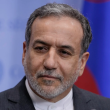

Iran’s Foreign Minister Araghchi: Passage for all commercial vessels through Strait of Hormuz is declared completely open for the remaining period of ceasefire. In line with the ceasefire in Lebanon, the passage for all commercial vessels through Strait of Hormuz is declared completely open for the remaining period of ceasefire, on the coordinated route as already announced by Ports and Maritime Organisation of the Islamic Rep. of Iran.
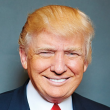
 IRAN HAS JUST ANNOUNCED THAT THE STRAIT OF IRAN IS FULLY OPEN AND READY FOR FULL PASSAGE. THANK YOU!
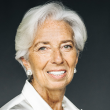

The global economy is navigating turbulent waters. Competing forces affecting economic growth are intersecting in a complex and uncertain environment. Global growth has been supported by rising investments related to artificial intelligence and fiscal policy across major economies. At the same time, geopolitical and trade tensions are a headwind and a major source of risks. The adverse effects on the global economy from the war in the Middle East primarily stem from the sharp increase in energy prices. Together with tighter financial conditions and heightened uncertainty, the war is having a negative impact on global growth, while posing upside risks to inflation. Other geopolitical tensions, in particular Russia’s unjustified war against Ukraine, remain a major source of uncertainty. Protectionist policies are also weighing on global trade and fuelling uncertainty, while triggering a reconfiguration of global trade flows. Additional frictions in international trade could disrupt supply chains, reduce exports and weaken consumption and investment. A predictable and open international economic order remains essential t ECB'S LAGARDE SAYS THAT UNCERTAINTY ABOUT EURO AREA INFLATION HAS GROWN A LOT AFTER THE MIDDLE EAST WAR STARTED. ECB'S LAGARDE SAYS UPSIDE RISKS TO OUTLOOK INCREASE, PARTICULARLY IN THE SHORT TERM. ECB's Lagarde: Inflation could turn out higher than the baseline, in particular if inflation expectations and wage growth were to rise in response more than expected ECB's Lagarde: Determined to ensure inflation stabilizes at 2%
