


CA BOC Press Conference


It's among the primary method the BOC uses to communicate with investors regarding monetary policy. It covers in detail the factors that affected the most recent interest rate decision, such as the overall economic outlook and inflation. Most importantly, it provides clues regarding future monetary policy;
The press conference has 2 parts - first a prepared statement is read, then the conference is open to press questions. The press conference is webcasted on the BOC website;
- History
| Expected Impact / Date | Description |
|---|---|
| Jul 15, 2026 | |
| Jun 10, 2026 | |
| May 28, 2026 | Due to hold a press conference about the Financial System Review, in Ottawa; |
| Apr 29, 2026 | |
| Mar 18, 2026 | |
| Jan 28, 2026 | |
| Dec 10, 2025 | |
| Oct 29, 2025 | |
-
- CA BOC Press Conference News
 From @financialjuice|9 hr ago
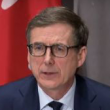
BoC's Gov. Macklem: The Canadian dollar weakness has not been a major factor in rate decisions. BoC's Gov. Macklem: I would not want to respond to a spike in inflation caused by rising oil prices that then came down.
 From @financialjuice|10 hr ago|1 comment
BoC's Gov. Macklem: Signs that the economy is expanding are clearer. BoC's Gov. Macklem: Exports adjusting to US tariffs and growing. BoC's Gov. Macklem: Q2 is looking pretty solid, will be assessing how sustainable the pickup is. BoC's Gov. Macklem: If oil prices do once again rise and feed into inflation, I expect to need consecutive rate hikes to keep inflation under control. BoC's Gov. Macklem: We're going to take our decisions one at a time.
 From youtube.com/bankofcanadaofficial|10 hr ago
On July 15, 2026, Governor Tiff Macklem and Senior Deputy Governor Carolyn Rogers answer questions from reporters following the policy rate decision and the release of the Monetary Policy Report.
 From bankofcanada.ca|11 hr ago
The Canadian economy has been adjusting to US tariffs and continued uncertainty about the review of the Canada‑United States‑Mexico Agreement, as well as slower population growth. Business investment has been roughly flat, exports and housing activity have declined and economic growth has been uneven. As a result, the level of gross domestic product was roughly unchanged from the first quarter of 2025 to the first quarter of 2026. The unemployment rate has generally fluctuated between 6½% and 7%, pointing to excess supply in the economy. Consumer price index inflation in Canada was close to the 2% target for more than a year and a half until the war in the Middle East began. The hostilities caused global oil prices to spike, pushing up gasoline prices. Inflation rose to 3.2% in May. However, inflation excluding gasoline, as well as measures of core inflation, stayed close to 2%. This suggests that, so far, spillovers to the prices of other goods and services remain contained. Canadian businesses are adapting to elevated geopolitical uncertainty stemming from US trade policy and developments in the Middle East. Despite some volatility, recent data suggest that the economy is evolving broadly in line with the outlook in the April Rep Bank of Canada sees 2026 growth at 0.7% (vs 1.2% in April MPR), sees 1.8% growth in 2027 (vs 1.6%), 1.8% in 2028 (vs 1.7%). BoC: Inflation to average 2.5% in 2026 (vs 2.3% in April), 2.0% in 2027 (vs 2.1%), 2.1% in 2028 (vs 2.0%). Just in | The Bank of Canada maintains its nominal neutral interest rate estimate at the midpoint of 2.25% to 3.25%, consistent with April's assessment.
 From bankofcanada.ca|11 hr ago
Good morning. I’m pleased to be here with Senior Deputy Governor Carolyn Rogers to discuss our quarterly Monetary Policy Report and today’s decision. Governing Council maintained the policy interest rate at 2.25%. We have three key messages. First, after stalling over the past year, economic growth looks to have resumed in Canada. While US trade policy continues to be a headwind, consumers have been resilient and businesses are adapting. Second, inflation in Canada is poised to ease gradually provided global oil prices decline from elevated levels. Third, uncertainty remains elevated. The conflict in the Middle East has re-escalated in recent days and trade discussions with the United States are ongoing. Let me expand on the outlook, the risks and the implications for monetary policy. Global growth has been dented by the conflict in the Middle East, but with oil prices coming part way back down, growth is expected to recover. Equity markets have been buoyant, and credit spreads remain compressed. Canada’s GDP growth was flat over the past year as the economy adjusted to new tariffs, elevated uncertainty and slower population growth. The economy remains in excess supply. The labour market has been soft, with the unemployment rate hovering in a range of 6½% to 7%. GDP growth in the second quarter is estimated to have picked up to 2½%. While this rebound from the first quarter largely reflects the unwinding of temporary factors, sources of economic growth appear to be broadening. Recent indicators point to continue BoC: Uncertainty is still high. MACKLEM: DATA WE HAVE RECEIVED SINCE APRIL HAVE INCREASED OUR CONFIDENCE THAT THE ECONOMY IS WORKING ITS WAY THROUGH PERIOD OF GLOBAL UPHEAVAL MACKLEM: WE WILL NOT LET HIGHER OIL PRICES BECOME PERSISTENT INFLATION #OOTT
 From bankofcanada.ca|11 hr ago
The Bank of Canada today held its target for the overnight rate at 2.25%, with the Bank Rate at 2.5% and the deposit rate at 2.20%. Canada’s economy is showing signs of improvement. Growth is picking up and inflation is projected to ease gradually from its recent spike. There are still important risks and uncertainties related to the war in the Middle East and US trade policy. Since the April Monetary Policy Report (MPR), global economic prospects have been dented by higher oil prices stemming from the Middle East conflict. At the same time, the build-out of artificial intelligence (AI) is supporting economic activity in a growing number of countries. Oil prices are still lower than their peak in April but the situation in the Middle East remains volatile. The path for global inflation is highly dependent on how the conflict unfolds. The US economy is growing at about 2½%, mostly because of strong consumption and booming AI investment. China’s economy is expanding solidly thanks to robust exports. Economic activity in the euro area has been weighed down by high energy prices, but is expected to strengthen in the second half of the year if energy prices come down as anticipated. The Bank projects global GDP growth will slow to 2¾% in 2026, mostly because of the effects of the Middle East conflict, and recover to around 3¼% in 2027 and 2028. Bank of Canada Governor Macklem: Inflation is poised to ease gradually, provided global oil prices decline, prepared remarks show. BoC: Near-term inflation expectations are sensitive to changes in gasoline prices, but longer-term inflation expectations remain well anchored. Bank Of Canada drops reference to consecutive hikes. BOC ALSO DROPS REFERENCE TO CUT
 From @financialjuice|Jun 10, 2026|1 comment
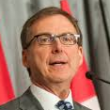
BoC's Gov. Macklem notes that core inflation has ticked down BoC's Gov. Macklem: The bank would also look at inflation expectations when mulling a possible rate hike. BoC's Gov. Macklem: Any Bank of Canada decision on a possible rate hike is less about a timeline and more about conditions. BoC's Gov. Macklem: Not a lot has changed since our last decision; there have not been big data surprises. BoC's Gov. Macklem: The Canadian economy is not clearly in a recession; the economy is weak but not in a recession.
- From youtube.com/bankofcanadaofficial|Jun 10, 2026
Governor Tiff Macklem discusses key issues involved in the Governing Council’s deliberations about the monetary policy decision. The Governor and Senior Deputy Governor then answer questions from reporters.
| Released on Jul 15, 2026 |
|---|

| Released on Jun 10, 2026 |
|---|
- Details