

Prop Firm DrawDown Protector : Prop Firm Capital Protection Expert MT5 | Forex Money Management: Forex Trade Management Expert MT4 | ICT Concepts Indicator MT5 |Smart Money Concepts Expert MT5 |Get a free Expert Advisor license via Telegram and WhatsApp
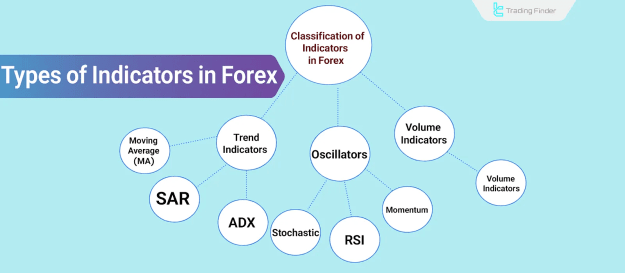
Core Categories of Forex Indicators
1. Trend Indicators
Trend indicators identify and quantify market direction, distinguishing between bullish, bearish, and sideways movements.
Key Examples:
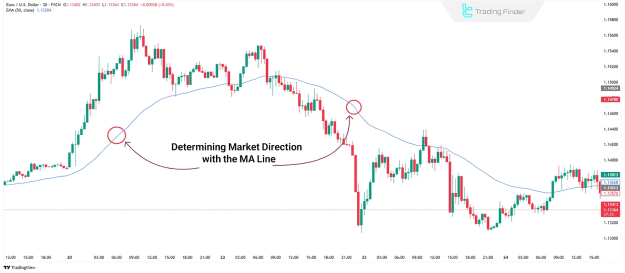
- Moving Averages (MA): Smooth price data to reveal direction
- SMA (Simple Moving Average)
- EMA (Exponential Moving Average)
- WMA (Weighted Moving Average)
- SMMA (Smoothed Moving Average)
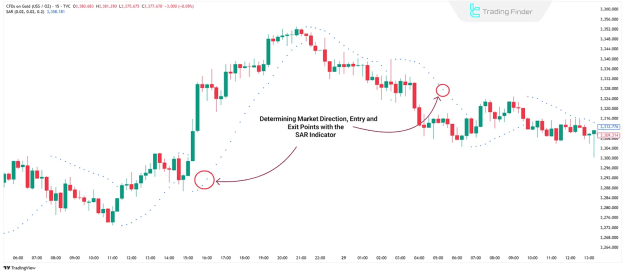
- Parabolic SAR: Displays dots above/below price to signal trend direction
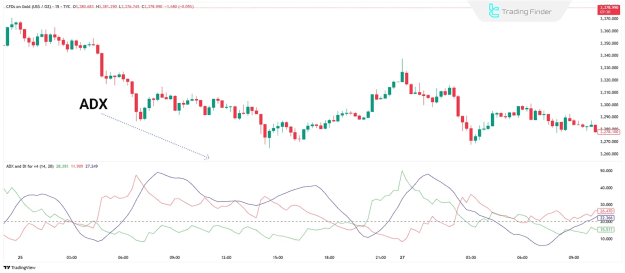
- Average Directional Index (ADX): Measures trend strength via DI+, DI-, and ADX lines
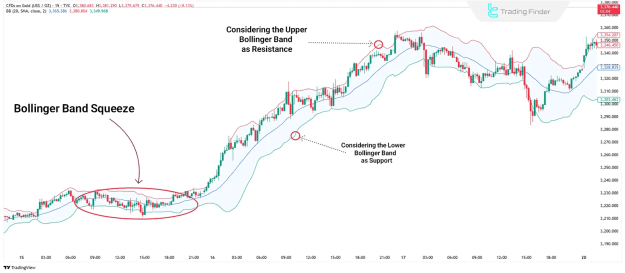
- Bollinger Bands: Uses standard deviation to identify volatility and support/resistance
2. Oscillators
Oscillators fluctuate within bounded ranges to identify momentum shifts and overbought/oversold conditions.
Key Examples:
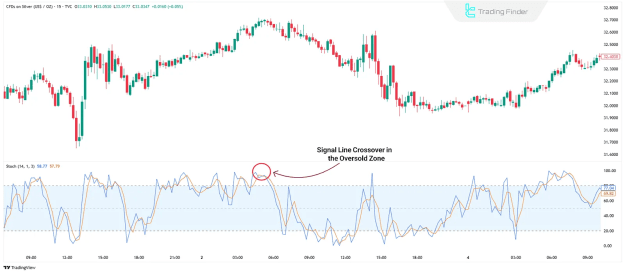
- Stochastic Oscillator: %K and %D lines signal reversals above 80 (overbought) or below 20 (oversold)
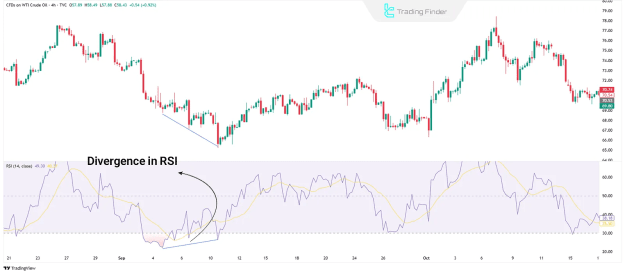
- Relative Strength Index (RSI): Detects trend strength and divergence for reversal signals
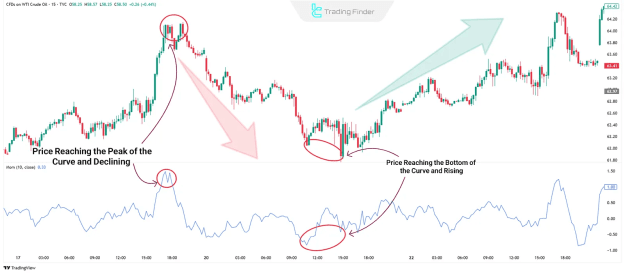
- Momentum Oscillator: Measures rate of price change to forecast movements
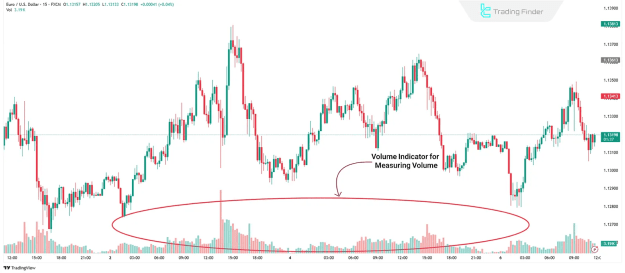
3. Volume Indicators
While Forex lacks centralized volume data, these tools estimate buying/selling pressure:
- Volume Indicator: Ticks-based volume approximation
- On-Balance Volume (OBV): Cumulatively adds/subtracts volume on up/down days
- Accumulation/Distribution: Measures money flow into/out of an asset
Strategic Indicator Implementation
Installation Guide
- Download indicator files from trusted sources
- Copy files to MT4/MT5 "Indicators" folder
- Restart trading platform
- Drag indicator from Navigator to chart
- Test functionality on demo account first
Professional Usage Tips
- Multi-Indicator Confluence: Combine tools to filter false signals
- Timeframe Optimization: Adjust settings for specific currency pairs and timeframes
- Price Action Validation: Confirm signals with support/resistance and chart patterns
- Market Context Alignment: Ensure indicators match current market conditions
Why Traders Rely on Technical Indicators
- Objective Analysis: Removes emotional decision-making
- Strategic Clarity: Provides clear entry/exit criteria
- Risk Management: Defines precise stop-loss and take-profit levels
- Efficiency: Automates complex calculations
Conclusion: Building Your Analytical Edge
Forex indicators and oscillators transform raw market data into actionable trading intelligence. From trend-following MAs to momentum-measuring RSI, these tools form the foundation of technical analysis.
Successful traders don't use indicators in isolation but combine them with:
- Price action analysis
- Risk management protocols
- Market context awareness
- Continuous strategy refinement
Whether you're a day trader or swing trader, mastering these tools is essential for navigating the currency markets with confidence.