

Prop Firm DrawDown Protector : Prop Firm Capital Protection Expert MT4 |Forex Money Management: Forex Trade Management Expert MT4 |ICT Concepts Indicator MT4 | Smart Money Concepts Expert MT4| Get a free Expert Advisor license via Telegram and WhatsApp
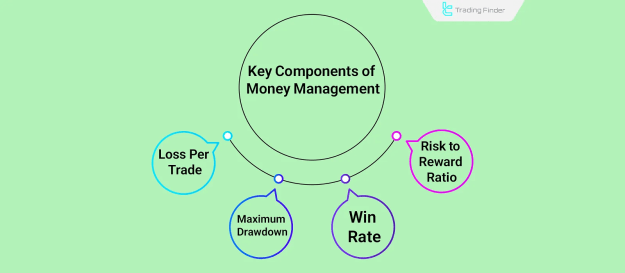
Key Components of Money Management
To implement a robust money management strategy, traders must consider several critical factors:
1. Risk-to-Reward Ratio
The risk-to-reward ratio measures potential profit relative to potential loss per trade. A well-balanced ratio ensures that profits outweigh losses over time.
2. Win Rate (Success Rate)
The percentage of winning trades versus losing trades directly impacts profitability. A high win rate allows for more flexibility in risk-taking.
3. Maximum Drawdown (MDD)
This refers to the largest peak-to-trough decline in account balance before recovery. Setting an MDD limit helps prevent catastrophic losses.
4. Loss Per Trade
Defining the maximum acceptable loss per trade protects capital and prevents emotional decision-making.
Benefits of Proper Money Management
Implementing disciplined money management techniques offers several advantages:
- Sustained Market Participation – Ensures long-term trading viability.
- Capital Preservation – Limits losses during unfavorable market conditions.
- Reduced Emotional Stress – Minimizes impulsive decisions caused by fear or greed.
- Enhanced Profitability – Optimizes returns through structured risk control.
Why Is Money Management Essential?
No trading strategy guarantees a 100% success rate. Market fluctuations can lead to unexpected losses, making money management crucial for:
- Mitigating Risk – Protects capital during losing streaks.
- Recovering Losses – Provides opportunities to offset previous drawdowns.
- Achieving Consistent Growth – Balances risk and reward for steady returns.
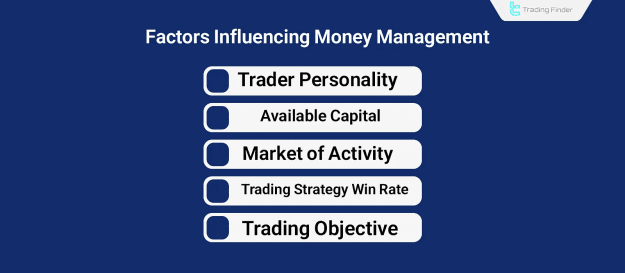
Factors Influencing Money Management Strategies
Several elements shape a trader’s money management approach:
1. Trader Personality
Risk tolerance varies among traders, influencing position sizing and market selection.
2. Account Size
Larger capital allows for diversified risk, while smaller accounts require stricter risk controls.
3. Market Volatility
Different markets (e.g., Forex, Stocks, Crypto) exhibit varying risk levels, requiring tailored strategies.
4. Trading Goals
Short-term scalping vs. long-term investing demand different money management techniques.
5. Strategy Win Rate
High-probability strategies permit higher risk per trade, whereas low-win-rate systems need tighter controls.
Money Management vs. Risk Management
While related, these concepts differ in scope:
- Money Management – Focuses on capital allocation, position sizing, and profit optimization.
- Risk Management – Specifically addresses loss prevention and downside protection.
A strong trading plan integrates both disciplines for optimal performance.
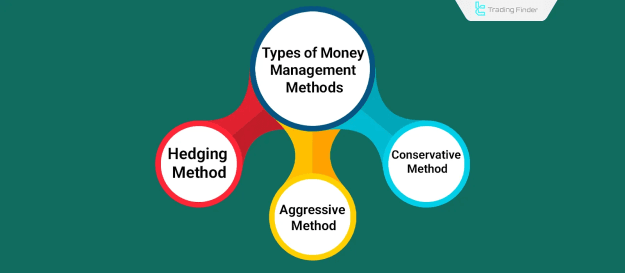
Types of Money Management Strategies
Traders adopt different methods based on risk appetite:
1. Conservative Approach
- Low-risk trades with diversified portfolios.
- Larger cash reserves for strategic entries.
2. Aggressive Approach
- High-risk, high-reward trades.
- Larger position sizes and leverage usage.
3. Hedging Approach
- Uses negatively correlated assets to offset losses.
- Balances risk across multiple positions.
Popular Money Management Techniques
1. The 2% Rule
- Risk only 2% of account balance per trade.
- Protects capital during losing streaks while allowing growth during wins.
2. Martingale Strategy
- Doubles position size after each loss to recover losses in a single win.
- High risk of margin calls in prolonged downtrends.
3. Anti-Martingale Strategy
- Reduces position size after losses to minimize drawdowns.
- Slower recovery but lower risk of catastrophic loss.
4. Portfolio Rebalancing
- Adjusts allocations to maintain desired risk exposure.
- Shifts profits from outperforming assets to underperforming ones.
Conclusion
Money management is a cornerstone of successful trading, ensuring disciplined risk control and consistent profitability. By incorporating key elements such as risk-to-reward ratios, maximum drawdown limits, and position sizing strategies, traders can optimize performance across various markets.
Whether adopting a conservative, aggressive, or hedging approach, aligning money management techniques with personal risk tolerance and trading goals is essential for long-term success.