

TP & SL Tool: Risk Reward Ratio Calculator RRR MT5 | Prop Firm Protector: Trade Assist Prop Firm Plus TF Expert MT5 | Money Management + DrawDown Protector: Trade Panel Prop Firm Drawdawn Limiter Pro MT5 |Get a free Expert Advisor license via Telegram and WhatsApp
What Is Monetary Policy?
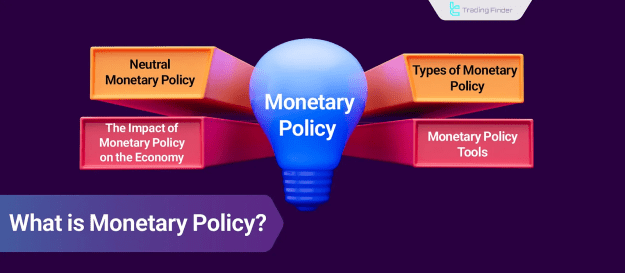
Monetary policy refers to the strategies employed by a central bank to regulate inflation, stabilize employment, and foster sustainable economic growth. Central banks worldwide implement distinct monetary policies, creating divergences that significantly impact financial markets—particularly the forex market.
Forex traders often exploit these policy differences to profit from currency fluctuations. For instance, if the European Central Bank (ECB) adopts an expansionary approach by cutting rates while the U.S. Federal Reserve maintains a contractionary stance, the resulting policy divergence could strengthen the U.S. dollar.
Key Monetary Policy Tools
Central banks deploy various instruments to adjust liquidity levels, either stimulating or tightening economic activity. Below are the primary tools used in monetary policy:
1. Interest Rates
Adjusting interest rates influences borrowing and spending. Lower rates encourage lending and investment, while higher rates curb inflation by reducing liquidity.
2. Open Market Operations (OMO)
Central banks buy or sell government bonds to regulate money supply. Purchasing bonds injects liquidity, whereas selling them absorbs excess funds.
3. Reserve Requirement Ratio
This mandates the percentage of deposits banks must hold in reserve. Increasing the ratio restricts lending, while decreasing it boosts available credit.
4. Discount Rate
The interest rate at which banks borrow from the central bank. A higher discount rate tightens liquidity, while a lower rate eases financial conditions.
5. Inflation Targeting
Central banks use forward guidance, policy statements, and hawkish/dovish tones to shape inflation expectations and market sentiment.
6. Currency Intervention
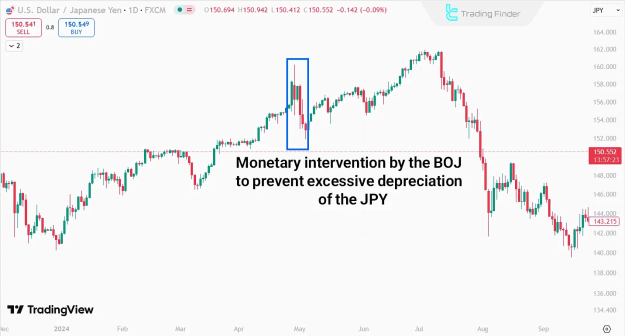
In extreme cases, central banks directly intervene in forex markets to stabilize exchange rates.
Example: BOJ’s Forex Intervention
The Bank of Japan (BOJ) intervened when the yen plummeted to historic lows, spending ¥9.8 trillion (~$62.7 billion) to curb excessive volatility.
Types of Monetary Policy
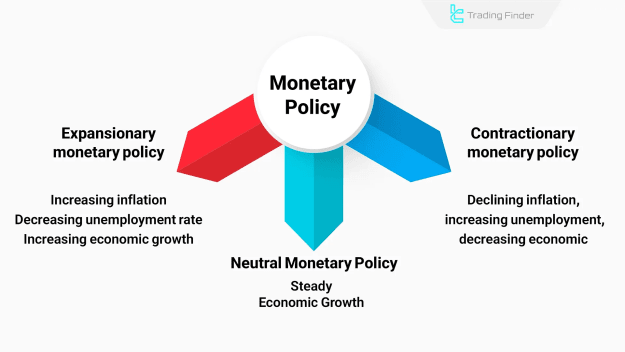
Central banks adopt different monetary policies based on economic conditions. The three primary types are:
1. Expansionary Monetary Policy
Implemented during recessions, this policy involves cutting interest rates or purchasing bonds to increase liquidity.
Impact of Expansionary Policy:
- Lower Unemployment: Stimulates demand, encouraging hiring.
- Economic Growth: Enhances credit availability and spending.
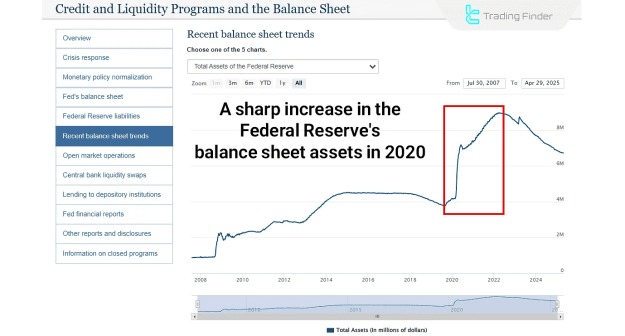
Case Study: Federal Reserve’s COVID-19 Response
The Fed’s balance sheet expanded sharply in 2020 due to aggressive bond-buying and rate cuts, supporting recovery.
2. Contractionary Monetary Policy
Used to combat inflation, this approach raises interest rates or sells bonds to reduce money supply.
Impact of Contractionary Policy:
- Higher Unemployment: Reduced demand pressures businesses to cut jobs.
- Slower Growth: Tightened liquidity suppresses economic activity, potentially leading to recession.
3. Neutral Monetary Policy
This maintains interest rates at a level that neither stimulates nor restricts growth, allowing steady economic expansion.
Conclusion
Monetary policy is a critical driver of financial markets, affecting forex, stocks, bonds, and commodities. By analyzing central bank actions—such as rate adjustments, bond operations, and policy statements—traders and investors can identify optimal opportunities across economic cycles.
Understanding these dynamics ensures better decision-making, whether capitalizing on forex volatility or adjusting investment portfolios in response to policy shifts.