

TP & SL Tool: Risk Reward Ratio Calculator RRR MT4 | Prop Firm Protector: Trade Assist Prop Firm Plus TF Expert MT4 | Money Management + DrawDown Protector: Trade Panel Prop Firm Drawdawn Limiter Pro MT4 |Get a free Expert Advisor license via Telegram and WhatsApp
Core Components of ICT Scalping
- Liquidity raid identification
- Market Structure Shift (MSS) confirmation
- Optimal Trade Entry (OTE) zones
- Displacement moves analysis
- Precision risk management
Building an ICT Scalping Model
To implement this strategy effectively, traders must define three critical elements:
1. Entry Conditions
- Liquidity raids at recent highs/lows
- Clear Market Structure Shift confirmation
- Price retracement to OTE zones (62%-79% Fibonacci)
2. Stop Loss Placement
- Below recent low for long positions
- Above recent high for short positions
- Adjust based on volatility and timeframe
3. Take Profit Strategy
- Initial target at opposite structure level
- Partial profit taking at key levels
- Potential breakeven move after initial target
Advantages and Limitations of ICT Scalping
Key Benefits
- Exceptionally precise entry points using OTE zones
- Favorable risk-to-reward ratios through proper structure alignment
- Adaptability to algorithmic trading implementations
- Effective in volatile market conditions
- Reduced exposure time in unfavorable trades
- Multiple confirmation layers increase probability
Potential Challenges
- Requires constant market monitoring
- Sensitive to market noise and false breakouts
- Demands significant practice and experience
- Less effective on higher timeframes
- Rapid decision-making under time pressure
- Potential for missed targets in ranging markets
Bullish Scalping Setup Execution
Step-by-Step Process
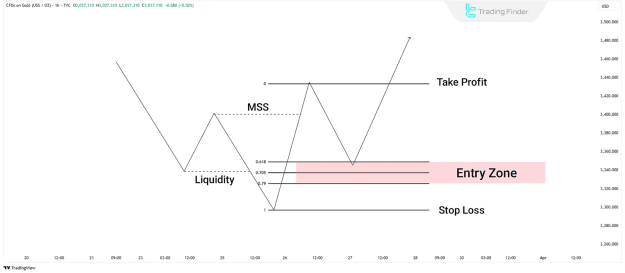
- Identify recent swing low as potential liquidity pool
- Observe price breaking below this level (liquidity grab)
- Watch for strong upward displacement move
- Confirm Market Structure Shift by breaking previous high
- Apply Fibonacci retracement to displacement leg
- Enter long at 62%-79% retracement zone
- Place stop loss below recent swing low
- Set initial take profit at new high
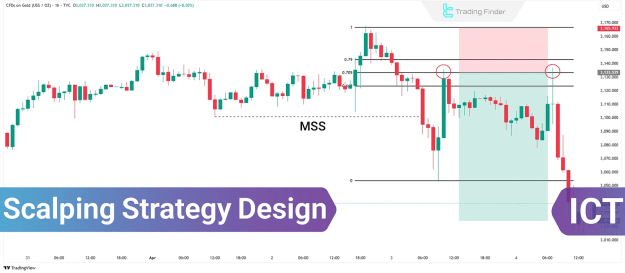
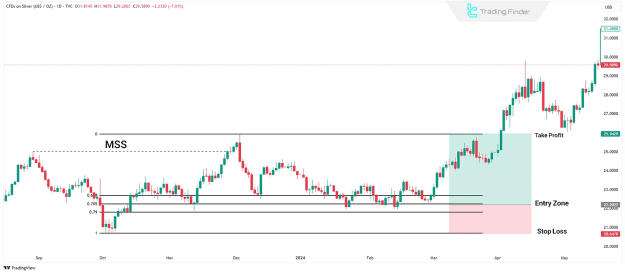
Example: USDCHF 1-minute chart showing complete bullish setup execution.
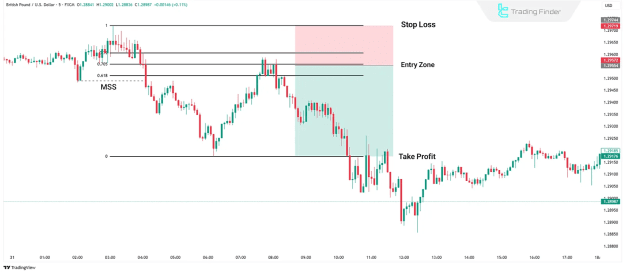
Bearish Scalping Setup Execution
Step-by-Step Process
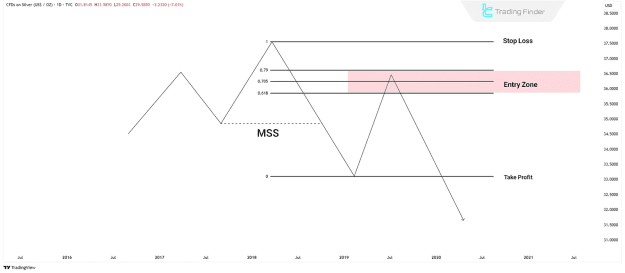
- Mark recent swing high as potential liquidity zone
- Monitor price breaking above this level (liquidity collection)
- Observe strong downward displacement move
- Confirm MSS by breaking previous low
- Draw Fibonacci retracement on downward move
- Enter short at 62%-79% retracement area
- Position stop loss above recent swing high
- Target initial take profit at new low
Example: GBPUSD 1-minute chart demonstrating complete bearish setup.
Critical Success Factors
- Liquidity Analysis: Proper identification of institutional order clusters
- Structure Confirmation: Clear MSS before considering entries
- Patience: Waiting for full OTE retracement
- Discipline: Strict adherence to risk parameters
- Adaptability: Adjusting to changing market conditions
Conclusion
The ICT scalping strategy offers traders a structured approach to short-term trading by combining liquidity concepts with precise entry techniques. While demanding in execution, this methodology provides clear rules for identifying high-probability setups in fast-moving markets. Success requires thorough understanding of market structure, disciplined risk management, and consistent practice across various market conditions.