

TP & SL Tool: Risk Reward Ratio Calculator RRR MT4 | Prop Firm Protector: Trade Assist Prop Firm Plus TF Expert MT4 | Money Management + DrawDown Protector: Trade Panel Prop Firm Drawdawn Limiter Pro MT4 |Get a free Expert Advisor license via Telegram and WhatsApp
What Is a Market Structure Shift (MSS)?
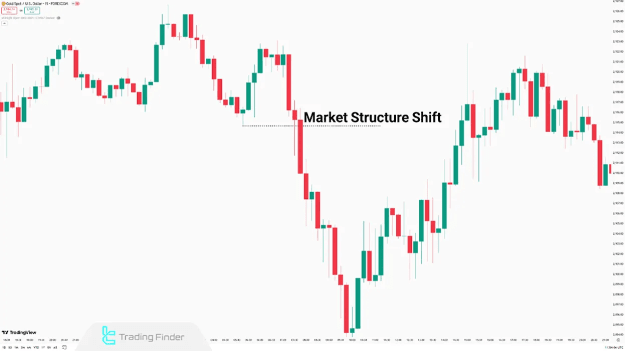
A Market Structure Shift signals a genuine change in trend. It occurs when the price breaks through a significant support or resistance level, forming new higher highs (HH) or lower lows (LL), depending on the previous trend.
Key Characteristics of Market Structure Shift (MSS):
- Occurs when swing highs are broken in a downtrend, or swing lows in an uptrend
- Confirms the reversal of trend direction
- Formation of new HH or LL marks the structural transition
- Followed by increased momentum and visible liquidity
- A pullback to the broken level (support/resistance retest) is typically seen
How to Identify a Market Structure Shift:
- Observe the current trend by analyzing swing highs and lows
- Watch for a break in the previous high/low
- Confirm the breakout with new price structure (HH or LL)
- Assess the strength of the price move and liquidity spike
- Analyze higher timeframes for confirmation
- Check for potential Liquidity Grabs to avoid misinterpretation
What Is a Liquidity Grab?
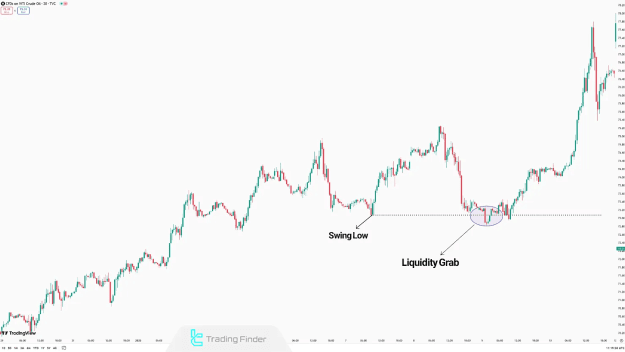
A Liquidity Grab is a short-lived false breakout. The price briefly pierces a support or resistance level, triggering stop-losses, only to reverse and continue in the original trend direction.
Key Characteristics of a Liquidity Grab:
- Appears near key support or resistance levels
- Price breaks the level but fails to hold above or below
- Triggers stop-losses placed by retail traders
- Price reverses with increased momentum and liquidity
- Commonly occurs on lower timeframes (1M–5M)
- Used by institutions to collect liquidity for large directional moves
How to Identify a Liquidity Grab:
- Price approaches a known liquidity pool (support/resistance/stop zones)
- Breaks beyond the level, triggering pending orders
- Rapid reversal indicates absorption of stop orders
- No continuation of breakout confirms it was a trap
- Ideal for scalping setups when confirmed with ICT confluences
MSS vs. Liquidity Grab: Core Differences
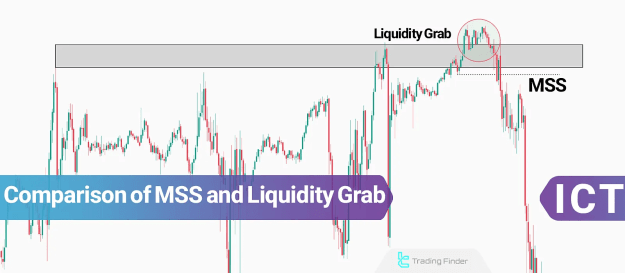
Understanding the difference between MSS and Liquidity Grab is crucial to avoid entry mistakes and manage trades effectively.
Structure and Momentum:
- MSS: A real structural break with strong momentum and confirmation
- Liquidity Grab: A fake breakout with a quick reversal and liquidity spike
Purpose:
- MSS: Indicates a true trend reversal
- Liquidity Grab: Collects orders before continuing the existing trend
Timeframe Relevance:
- MSS: Seen more clearly in mid-to-higher timeframes (15M–30M and above)
- Liquidity Grab: Common in low timeframes (1M–5M)
Trading Styles:
- MSS: Best suited for swing trading setups
- Liquidity Grab: Favors scalping or short-term trades
Why Distinguishing MSS from Liquidity Grabs Matters
Avoiding Entry Errors:
Traders often confuse a Liquidity Grab with a Market Structure Shift. When price breaks a level and returns, misreading this move may lead to premature entries or stop-loss hits.
- Liquidity Grab: Fakeout and return to original trend
- MSS: Valid breakout and trend reversal
Enhancing Entry and Exit Precision:
- Correctly identifying MSS allows for confident trend reversal entries
- Recognizing Liquidity Grabs helps catch short-term pullbacks or scalps
Improved Risk Management:
- Institutions use Liquidity Grabs to exploit poor retail stop-loss placement
- MSS offers clearer zones for placing stop-loss and take-profit levels
Conclusion
Market Structure Shift (MSS) represents a real and actionable change in price direction, providing strong signals for trend-based trades. It’s best observed in mid-to-high timeframes, where breakouts are backed by liquidity and price structure.
Liquidity Grabs, on the other hand, are manipulative moves designed to trap retail traders. They occur mostly in lower timeframes and should not be mistaken for trend reversals.
By mastering the distinction between MSS and Liquidity Grabs, traders can sharpen their strategies, reduce risk exposure, and significantly improve trade timing and decision-making.