

TP & SL Tool: Risk Reward Ratio Calculator RRR MT5 | Prop Firm Protector: Trade Assist Prop Firm Plus TF Expert MT5 | Money Management + DrawDown Protector: Trade Panel Prop Firm Drawdawn Limiter Pro MT5 |Get a free Expert Advisor license via Telegram and WhatsApp
The Inflation Mechanism Explained
Inflation manifests through two primary channels:
- Currency devaluation (reduced purchasing power)
- Rising production costs (supply-side pressures)
Central banks worldwide monitor these developments through carefully constructed baskets of goods and services that reflect typical consumer expenditures.
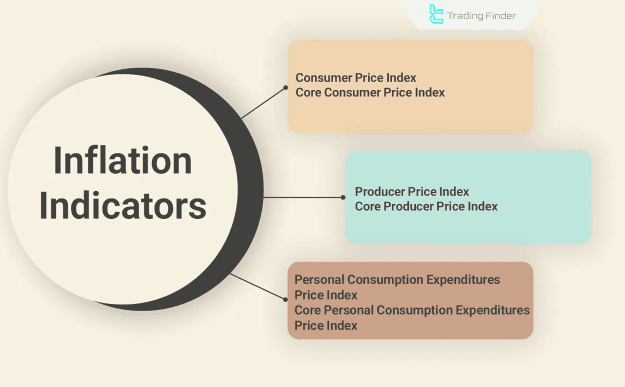
Key Inflation Indicators Every Trader Should Know
Consumer Price Index (CPI)
- Measures retail price changes for a fixed basket of consumer goods
- Includes volatile components like food and energy
- Serves as the baseline inflation measure for most economies
Core CPI
- Excludes food and energy prices due to their inherent volatility
- Provides clearer view of underlying inflation trends
- Primary benchmark for central bank policy decisions
Example: The ECB's 2% inflation target specifically references Core CPI figures.
Producer Price Index (PPI)
- Tracks input costs for manufacturers and service providers
- Functions as leading indicator for consumer inflation
- Particularly sensitive to commodity price fluctuations
Personal Consumption Expenditures (PCE)
- The Federal Reserve's preferred inflation gauge
- Incorporates variable weighting of consumption items
- Includes comprehensive income and savings data
- More accurately reflects shifting consumer behavior than CPI
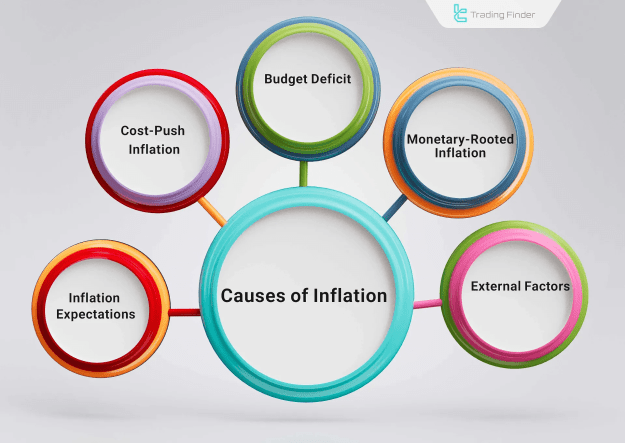
The Inflationary Process: Causes and Effects
Demand-Pull Inflation
- Occurs when money supply growth outpaces economic output
- Driven by expansionary monetary policies:
- Interest rate reductions
- Quantitative easing programs
- Fiscal stimulus measures
Cost-Push Inflation
- Results from rising production expenses:
- Increased raw material costs
- Higher wage demands
- Supply chain disruptions
Inflation Expectations
- Self-reinforcing cycle where anticipated price increases drive actual inflation
- Measured through consumer sentiment surveys
- Can create persistent inflationary environments
Inflation Control Mechanisms
Central banks employ several tools to manage price stability:
Monetary Policy Instruments
- Interest rate adjustments (primary tool)
- Reserve requirement modifications
- Open market operations
Fiscal Policy Measures
- Government spending controls
- Tax policy adjustments
- Debt management strategies
The MV=PQ equation demonstrates how money supply (M) and velocity (V) interact with price levels (P) and economic output (Q).
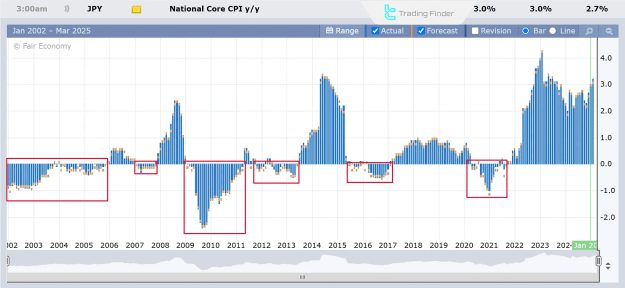
The Dangers of Deflation
While excessive inflation poses problems, deflationary environments present unique challenges:
- Creates disincentives for consumption and investment
- Leads to economic stagnation
- Difficult to reverse through conventional policy
Japan's "Lost Decade" provides a textbook case of deflationary spiral consequences.
Optimal Inflation Targets
Economic research suggests:
- 2% ideal for developed economies
- 2-4% appropriate for emerging markets
These ranges balance:
✓ Price stability
✓ Employment growth
✓ Sustainable economic expansion
Market Implications of Inflation Data
Forex Market Reactions
- Higher-than-expected inflation typically strengthens currency (rate hike expectations)
- Core measures carry greater significance than headline numbers
- PCE releases particularly impact USD pairs
Equity Market Effects
- Moderate inflation supports corporate earnings
- Excessive inflation erodes profit margins
- Sector performance varies significantly (financials vs. utilities)
Commodity Relationships
- Traditional inflation hedges (gold, real assets) often benefit
- Industrial commodities sensitive to demand destruction
- Energy markets show complex correlations
Practical Trading Considerations
Market participants should:
- Maintain an economic calendar with inflation release dates
- Understand each indicator's specific components
- Monitor central bank commentary on data interpretations
- Watch for divergences between different inflation measures
Conclusion
Navigating Inflationary Environments
Inflation remains among the most critical macroeconomic factors influencing financial markets. By understanding its measurement, causes, and policy implications, traders can:
- Anticipate central bank actions
- Identify sector rotation opportunities
- Manage portfolio risk effectively
The most successful market participants combine inflation data analysis with technical indicators to develop robust trading strategies across all market conditions.