

TP & SL Tool: Risk Reward Ratio Calculator RRR MT5 | Prop Firm Protector: Trade Assist Prop Firm Plus TF Expert MT5 | Money Management + DrawDown Protector: Trade Panel Prop Firm Drawdawn Limiter Pro MT5 |Get a free Expert Advisor license via Telegram and WhatsApp
What Is Liquidity in Forex Trading?
Liquidity determines how easily an asset can be bought or sold without causing significant price fluctuations. A highly liquid market has a high number of active buyers and sellers, ensuring smooth trade execution.
Key Characteristics of Liquidity:
- High Liquidity: Assets can be quickly converted to cash with minimal price impact.
- Market Depth: Measured by the volume of pending orders—higher volumes indicate stronger liquidity.
- Role of Market Makers: They manipulate price movements by targeting dense order clusters, such as stop-loss levels, to absorb retail traders’ liquidity.
The Master Liquidity Trading Strategy: Pros and Cons
Advantages of Mastering Liquidity
- Anticipates Market Moves Early – Identifying liquidity pools helps predict price reversals.
- Reduces Stop-Loss Hunting Risk – Understanding Market Maker behavior minimizes unexpected losses.
- Enhances Risk Management – Combines practical analysis with strategic trade execution.
Disadvantages of Mastering Liquidity
- Requires Advanced Knowledge – Traders must understand market structure, Fair Value Gaps (FVG), and order flow dynamics.
- Time-Consuming Learning Curve – Mastering Market Maker behavior takes experience and patience.
3-Step Process to Identify and Trade Liquidity
Step 1: Locate Key Liquidity Zones
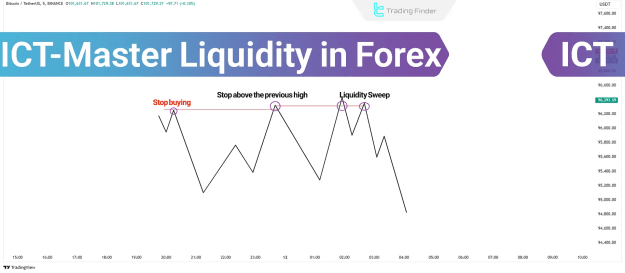
- Focus on previous highs and lows, where pending orders (stop-losses and take-profits) accumulate.
- Market Makers often target these levels to trigger orders before reversing price direction.
Step 2: Observe Market Maker Behavior
- After liquidity is swept (orders triggered), price often reverses.
- Confirmation comes from Fair Value Gaps (FVGs) or order block formations.
Step 3: Execute Trades with Proper Risk Management
- Enter trades in FVGs or after liquidity sweeps.
- Place stop-loss orders beyond recent highs/lows to avoid premature exits.
- Target the next liquidity zone for optimal profit-taking.
Types of Liquidity in Forex Trading
1. Buy-Side Liquidity (BSL)
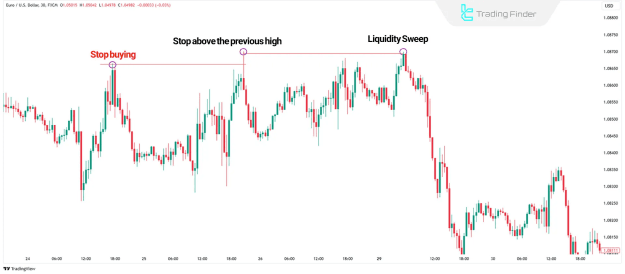
- Represents pending buy orders (Buy Stops) placed above key highs.
- Traders use these levels as stop-loss zones for short positions.
- Market Makers hunt BSL by pushing price up, triggering buy orders, then reversing downward.
2. Sell-Side Liquidity (SSL)
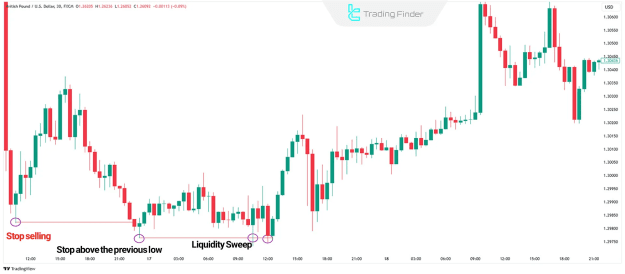
- Refers to pending sell orders (Sell Stops) placed below key lows.
- Used as stop-loss points for long positions.
- Market Makers target SSL, triggering sell orders before reversing upward.
Why Is Liquidity Crucial in Forex Trading?
1. Drives Market Movement
- Price moves toward areas with high liquidity (order clusters).
- After sweeping one side (BSL or SSL), the market often reverses to hunt the opposite side.
2. Key to Price Action Analysis
- Liquidity zones act as magnet areas where price accelerates before reversing.
- Understanding these levels helps traders align with institutional order flow.
3. Prevents Stop-Loss Hunting
- Retail traders often place stops at obvious levels, making them easy targets.
- Recognizing liquidity zones helps avoid common Market Maker traps.
4. Essential for Trading Success
- Mastering liquidity allows traders to anticipate reversals and trade with institutional flow.
- Combining liquidity analysis with FVGs and market structure enhances trade accuracy.
Conclusion
The Master Liquidity Trading Strategy revolves around identifying key liquidity zones, understanding Market Maker behavior, and executing trades in Fair Value Gaps (FVGs). By focusing on order flow dynamics, traders can predict reversals, minimize risks, and improve profitability.
Key Takeaways:
- Liquidity = Order Clusters – Price moves toward high order density areas.
- Market Makers Hunt Liquidity – They trigger stops before reversing.
- Trade in FVGs – Enter after liquidity sweeps for high-probability setups.
- Risk Management Is Critical – Place stops beyond recent highs/lows.
By mastering liquidity, traders gain an edge in Forex markets, aligning their strategies with institutional order flow for long-term success.