

Types of Order Blocks
The market typically demonstrates two primary types of price movements:
- Upward
- Downward
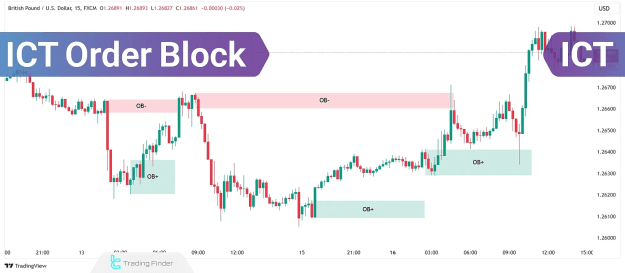
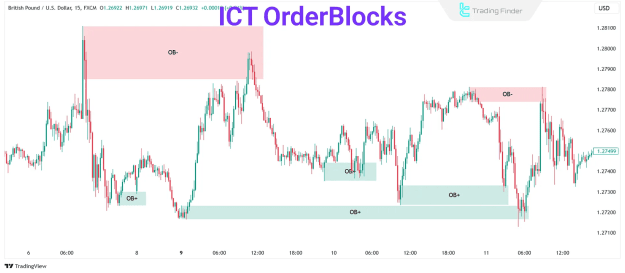
Based on these movements, order blocks are categorized into two types:
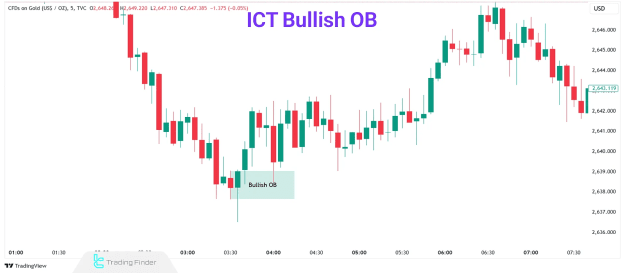
Bullish Order Block (OB+)
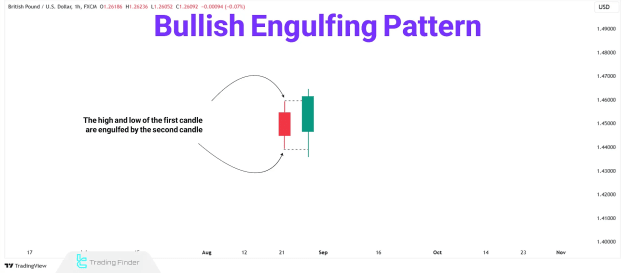
A Bullish Order Block signifies a zone on the price chart characterized by considerable buying pressure, leading to a swift upward market movement. Typically, this block consists of the last bearish candle preceding a robust bullish surge, often featuring two candles: the first being bearish and followed by a strong bullish engulfing candle.
Identifying a Bullish Order Block
To confirm a valid bullish order block, the following criteria should be met:
- The second bullish candle must eliminate liquidity below the previous bearish candle.
- The second bullish candle must close above the high of the preceding bearish candle.
- There should be an imbalance in lower timeframes within the order block area.
- A Market Structure Shift (MSS) must be evident in lower timeframes.
In essence, the second candle should completely engulf the first candle.
Bearish Order Block (OB-)
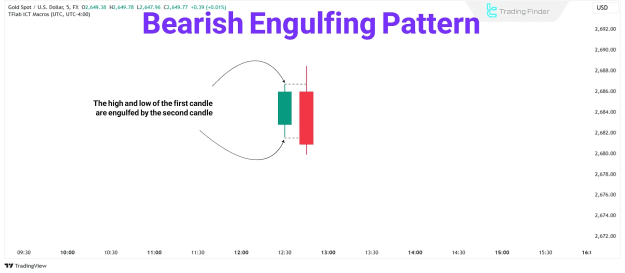
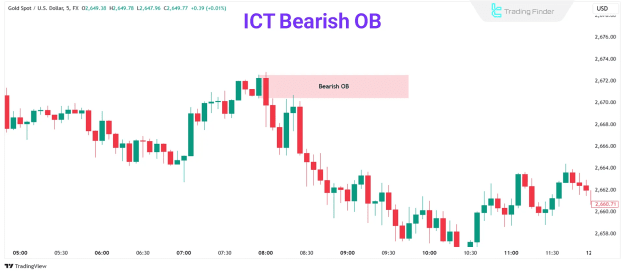
Conversely, a Bearish Order Block represents an area where significant selling pressure causes a rapid downward market movement. This block typically consists of a bullish candle followed by a strong bearish engulfing candle.
Identifying a Bearish Order Block
To identify a valid bearish order block, ensure the following:
- The second bearish candle must take out liquidity above the previous bullish candle.
- The second bearish candle must close below the low of the preceding bullish candle.
- An imbalance should be present in lower timeframes within the order block area.
- A Market Structure Shift (MSS) must be observable in lower timeframes.
Again, the second candle must fully engulf the first candle.
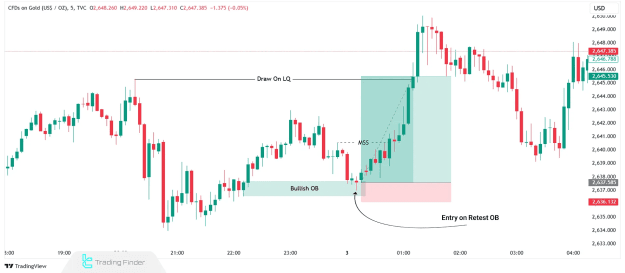
How to Trade a Bullish ICT Order Block
To trade effectively using a Bullish ICT Order Block, adhere to these guidelines:
- Identify the Market Order Flow: Assess the prevailing market trend.
- Validate in an Uptrend: Bullish order blocks are most reliable in uptrends; in downtrends, they may only provide short-term reversals.
- Identify a Valid Bullish ICT Order Block: Look for key areas that exhibit strong bullish setups.
- Wait for Price Return to Order Block: Upon identification, wait for the price to retrace to the bullish order block.
- Entry at 50% Retracement: Initiate a buy trade near the block's 50% retracement level.
- Confirm with Lower Timeframes: Utilize lower timeframes (e.g., 15 or 5 minutes) for confirmation, such as observing market structure shifts.
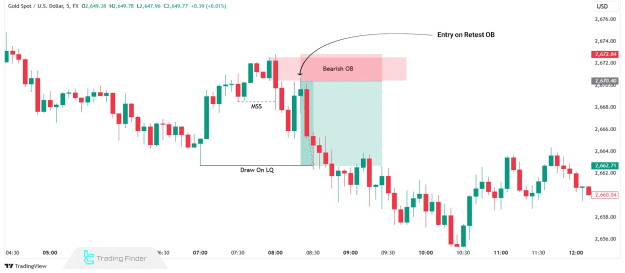
How to Trade a Bearish ICT Order Block
For trading based on a Bearish ICT Order Block, follow these steps:
- Identify the Market Order Flow: Determine the prevailing market trend.
- Validate in a Downtrend: Bearish order blocks are more reliable in downtrends; in uptrends, they may only offer short-term reversals.
- Identify a Valid Bearish ICT Order Block: Seek key areas with strong bearish setups.
- Wait for Price Return to Order Block: Once identified, wait for the price to return to the bearish order block.
- Entry at 50% Retracement: Initiate a sell trade around the block's 50% retracement level.
- Confirm with Lower Timeframes: Use lower timeframes (e.g., 15 or 5 minutes) for confirmation, such as market structure shifts.
Stop Loss and Take Profit for Order Block Trades
When trading based on bullish or bearish order blocks:
- Position the stop loss a few pips below or above the order block.
- For profit-taking, target the next significant liquidity level.
- Always risk no more than 1% of your capital on a single trade.
Final Notes
Order blocks may also manifest after pullbacks within trends, reinforcing the strength of the trend. For example, in a downtrend, a bearish order block may form following a bullish pullback, confirming the downtrend and presenting a new selling opportunity. Similarly, in an uptrend, a bullish order block may arise after a bearish pullback, affirming the uptrend and offering a new buying opportunity.