
-
What the Supreme Court's tariff ruling changes, and what it doesn't

In a clear rebuke to President Donald Trump’s tariff policies, the Supreme Court ruled on February 20 that many of his tariffs—those that invoked the International Emergency Economic Powers Act (IEEPA)—were unconstitutional. The statute does not authorize the use of tariffs. Moreover, as the ruling emphasized, the president does not have authority to tax. The power to tax, including the imposition of tariffs, lies instead with the US Congress, in the unambiguous words of the US Constitution. Undeterred, the president has now turned to another legal authority, Section 122 of the Trade Act of 1974, which allows ... (full story)
- Comments / Top
- Subscribe
-
Related Stories

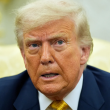

 Any Country that wants to “play games” with the ridiculous supreme court decision, especially those that have “Ripped Off” the U.S.A. for years, and even decades, will be met with a much higher Tariff, and worse, than that which they just recently agreed to. BUYER BEWARE!!! Thank you for your attention to this matter. President DONALD J. TRUMP

From media.rabobank.com | Feb 23, 2026
On Friday, February 20, the Supreme Court ruled that President Trump exceeded his power when he imposed the reciprocal and fentanyl-related tariffs by using the International Emergency Economic Powers Act of 1977 (IEEPA). On the same day, President Trump imposed a new 10% global tariff based on Section 122 of the Trade Act of 1974. On Saturday, Trump raised ...
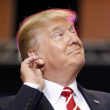 Numerous stories from the Fake News Media have been circulating stating that General Daniel Caine, sometimes referred to as Razin, is against us going to War with Iran. The story does not attribute this vast wealth of knowledge to anyone, and is 100% incorrect. General Caine, like all of us, would like not to see War but, if a decision is made on going against Iran at a Military level, it is his opinion that it will be something easily won. He knows Iran well in that he was in charge of Midnight Hammer, the attack on the Iranian Nuclear Development. It is a Development no longer, but rather, was blown to smithereens by our Great B-2 Bombers. Razin Caine is a Great Fighter, and represents the Most Powerful Military anywhere in the World. He has not spoken of not doing Iran, or even the fake limited strikes that I have been reading about, he only knows one thing, how to WIN and, if he is told to do so, he will be leading the pack. Everything that has been written about a potential War with Iran has been written incorrectly, and purposefully so. I am the one that makes the decision, I would rather have a Deal than not but, if we don’t make a Deal, it will be a very bad day for that Country and, very sadly, its people, because they are great and wonderful, and something like this should never have happened to them. PRESIDENT DONALD J. TRUMP
