
-
Bitcoin vs. Gold: Which Is the Better Hedge Against Inflation?

Inflation is a thief. It sneaks into your pocket at night, light on its feet, and by the time you wake up your money has less bite. Bread costs more. Rent climbs. Gas makes you wince. Everyone knows the feeling. The world keeps turning, but your paycheck seems to shrink. So what do you do? You find something that fights back. For centuries that answer was gold. People hoarded it, wore it, buried it. Armies marched to steal it. Kings minted it into coins. When paper money failed, gold stood tall. Now there is a new challenger. Bitcoin. Born in the wreckage of the 2008 crash, it has grown from an experiment into a ... (full story)
- Comments / Top
- Subscribe
-
- Older Stories
 From omfif.org|Oct 14, 2025
The ‘digital euro does not appear to be the solution to any of these problems’ is a familiar refrain in central bank digital currency discussions with incumbent commercial bank ...
 From beemarkets.com|Oct 14, 2025
Cryptocurrencies continued to lose ground after a historic round of liquidations that triggered a sharp selloff over the weekend, as trade tensions weighed on risk assets. ...
 From imf.org|Oct 14, 2025
Stretched asset valuations and pressures in core sovereign bond markets are keeping financial stability risks elevated amid heightened economic uncertainty. These vulnerabilities could be amplified by the growth of nonbank financial institutions—through their growing importance as market makers, liquidity providers and intermediaries in private credit, real estate, and crypto markets. As we detail in our new Global Financial Stability Report, stress testing shows that the vulnerabilities of these nonbank intermediaries can quickly transmit to the core banking system, amplifying shocks, and complicating crisis management. To be clear, policymakers have had nonbanks on their radar for some time. They include insurance companies, pension funds, and investment funds; and while they do not take deposits, they play an increasingly large role in global markets. Regulatory treatment also varies considerably, with dedicated supervisory frameworks for insurance companies and less comprehensive prudential oversight for many others. While nonbanks can help facilit GROUP SAYS IN SEMIANNUAL GLOBAL FINANCIAL STABILITY REPORT THAT RISKS REMAIN ELEVATED IMF SAYS RISK ASSET PRICES ARE WELL ABOVE FUNDAMENTALS, INCREASING ODDS OF 'DISORDERLY' CORRECTION IMF WARNS OF 'COMPLACENT' MARKETS IN FACE OF GEOPOLITICAL, ECONOMIC AND FINANCIAL RISKS IMF…
-
- Newer Stories
 From youtube.com/markets|Oct 14, 2025|3 comments
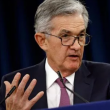
Fed Chair Jerome Powell speaks at the National Association for Business Economics (NABE) Annual Meeting in Philadelphia on economic outlook on Tuesday.
 From @DeItaone|Oct 14, 2025|23 comments
FED’S POWELL: DATA BEFORE U.S. GOVERNMENT SHUTDOWN SUGGESTED GROWTH MAY BE BETTER THAN EXPECTED
 Understanding the Fed’s Balance Sheet Thank you, Emily. And thank you to the National Association for Business Economics for the Adam Smith Award. It is an honor just to be mentioned alongside past recipients, including my predecessors Janet Yellen and Ben Bernanke. Thank you for this recognition and for the opportunity to speak with you today. Monetary policy is more effective when the public understands what the Federal Reserve does and why. With that in mind, I hope to enhance understanding of one of the more arcane and technical aspects of monetary policy: the Federal Reserve's balance sheet. A colleague recently compared this topic to a trip to the dentist, but that comparison may be unfair—to dentists.1 Today, I will discuss the essential role our balance sheet played during the pandemic, along with some lessons learned. I will then review our ample reserves implementation framework and the progress we have made toward normalizing the size of our balance sheet. I will conclude with some brief remarks on the economic outlook. One of the primary purposes of a central bank is to provide the monetary foundation for the financial system and the broader economy. This foundation is made of central bank liabilities. On the Fed's balance sheet, the liability side of the ledger totaled $6.5 trillion as of October 8, and three categories account for roughly 95 percent of that total.2 First, Federal Reserve notes—that is, physical currency—totaled $2.4 trillion. Second, reserves—funds held by depository institutions at the Federal Reserve Banks—totaled $3.0 trillion. These deposits allow commercial banks to make and receive payments and meet regulatory requirements. Reserves are the safest and most liquid asset in the financial system, and only the Fed can create them. The adequate provision of reserves is essential to the safety and soundness of our banking system, the resilience and efficiency of our payments system, and ultimately the stability of our economy. FED’S POWELL: AVAILABLE DATA SHOW TARIFFS PUSHING UP PRICE PRESSURES FED’S POWELL: U.S. CENTRAL BANK HAS OTHER DATA BEYOND GOVERNMENT SOURCES TO USE FED’S POWELL: CURRENT FED POLICY TOOLKIT WORKING VERY WELL POWELL: OUTLOOK HASN’T CHANGED MUCH SINCE SEPTEMBER FED MEETING FED’S POWELL: MAY BE APPROACHING END OF BALANCE SHEET CONTRACTION ‘IN COMING MONTHS’
 From @NaeemAslam23|Oct 14, 2025
FED’S POWELL: FUTURE PATH OF MONETARY POLICY DRIVEN BY DATA, RISK ASSESSMENTS FED'S POWELL/NABE: GOODS PRICE INCREASES PRIMARILY REFLECT TARIFFS 'RATHER THAN BROADER INFL PRESSURES;' LONGER-TERM INFLATION EXPECTATIONS ANCHORED #Powell #FederalReserve #economy #NABE25 FED'S POWELL: A RISK THAT SLOW PASS THROUGH OF TARIFFS STARTS TO LOOK LIKE PERSISTENT INFLATION *POWELL: LABOR MARKET SHOWS PRETTY SIGNIFICANT DOWNSIDE RISKS Fed's Powell: Inflation is still on the way up.
