
-
The stablecoin law is here - It doesn't mean your US dollar-backed crypto is 100% safe
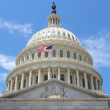
It may be "stablecoin summer" for crypto investors celebrating the passage of a U.S. law that brings regulatory clarity and is helping to speed institutional adoption of the popular digital tokens. But some major worries haven't been put to bed yet. Even with new regulations, stablecoins remain vulnerable to losing their peg, or worse, triggering a "bank run" in the crypto world. And if stablecoin adoption grows too fast, it might create new risks for the U.S. government debt market, said Davide Oneglia, macroeconomist and director at TS Lombard. Stablecoins are "not 100% safe for sure, and probably not even safe at ... (full story)
- Comments / Top
- Subscribe
-
- Older Stories
 From cnbc.com|Jul 30, 2025
Attitudes on Capitol Hill toward exchange-traded funds and cryptocurrency may be changing. Teucrium CEO and CIO Sal Gilbertie told CNBC’s “ETF Edge” regulators are becoming “more ...
 From @realDonaldTrump|Jul 30, 2025|22 comments
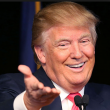
 2Q GDP JUST OUT: 3%, WAY BETTER THAN EXPECTED! “Too Late” MUST NOW LOWER THE RATE. No Inflation! Let people buy, and refinance, their homes!
 From bea.gov|Jul 30, 2025|35 comments
Real gross domestic product (GDP) increased at an annual rate of 3.0 percent in the second quarter of 2025 (April, May, and June), according to the advance estimate released by ...

-
- Newer Stories
 From bankofcanada.ca|Jul 30, 2025|15 comments
The Bank of Canada today maintained its target for the overnight rate at 2.75%, with the Bank Rate at 3% and the deposit rate at 2.70%. While some elements of US trade policy have started to become more concrete in recent weeks, trade negotiations are fluid, threats of new sectoral tariffs continue, and US trade actions remain unpredictable. Against this backdrop, the July Monetary Policy Report (MPR) does not present conventional base case projections for GDP growth and inflation in Canada and globally. Instead, it presents a current tariff scenario based on tariffs in place or agreed as of July 27, and two alternative scenarios—one with an escalation and another with a de-escalation of tariffs. While US tariffs have created volatility in global trade, the global economy has been reasonably resilient. In the United States, the pace of growth moderated in the first half of 2025, but the labour market has remained solid. US CPI inflation ticked up in June with some evidence that tariffs are starting to be passed on to consumer prices. The euro area economy grew modestly in the first half of the year. In China, the decline in exports to the United States has been largely offset by an increase in exports to the rest of the world. Global oil prices are close to their levels in April despite some volatility. Global equity markets have risen, and corporate credit spreads have narrowed. Longer-term government bond yields have moved up. Canada’s exchange rate has appreciated against a broadly weaker US dollar. Bank of Canada Flags Rate Cut Possibility Amid Weak Economy • May cut rates if downward pressure on inflation persists and price pressures stay contained • Underlying inflation seen at ~2.5% • Q2 GDP likely contracted by 1.5% due to export decline • Signs of rising… BANK OF CANADA: WITH HIGH UNCERTAINTY ON TARIFFS, ECONOMY SHOWING RESILIENCE, ONGOING PRESSURE ON INFLATION, GOV COUNCIL DECIDED TO HOLD RATES STEADY (as markets expected) #Canada
 From bankofcanada.ca|Jul 30, 2025
US tariffs are significantly higher than they were at the start of 2025, and US trade policy remains unpredictable. Inflation is near 2%, although underlying price pressures have picked up. With uncertainty about US trade policy still high, the outlook for the Canadian economy remains clouded. The global trade conflict continues to evolve. Since the time of the April Report, extreme trade tensions between the United States and China have receded. The US administration has reached agreements on tariffs with some countries, which have raised US tariffs significantly from January levels. The United States has also doubled its tariffs on imports of steel and aluminum and has threatened high, broad-based tariffs on many other trading partners if agreements are not reached soon. Economic scenarios for the outlook At the beginning of 2025, shifting US trade policy increased uncertainty about the economic outlook. This trade-related uncertainty has two layers. The first layer is around US trade policy. It is difficult to know what tariffs and countermeasures will be imposed, how long tariffs will last and how trade negotiations will play out. The second layer of uncertainty is about how households, businesses and governments will react and adapt to tariffs. In the April Report, the Bank of Canada presented two illustrative scenarios that explored different paths for US trade policy. This was done to address the first layer of uncertainty. To address the second layer of uncertainty, the Risks section focused on how the economy would respond to a given level of tariffs. Since April, the risk of a severe and escalating global trade conflict has diminished, and there is some clarity around what tariffs will look like. Nevertheless, how US trade policy will unfold remains highly uncertain. And while r Bank of Canada monetary policy report does not provide economic forecasts, cites uncertainty generated by US tariffs. Bank Of Canada Governor Tiff Macklem States That The Worldwide Effects Of U.S. Trade Policies Have Been Less Serious Than Expected So Far In BoC's current tariff scenario, GDP grows by about 1% in second half of 2025 and then picks up, hitting 1.8% in 2027. Inflation stays close to 2% over scenario horizon.
 From bankofcanada.ca|Jul 30, 2025|4 comments
Good morning. I’m pleased to be here with Senior Deputy Governor Carolyn Rogers to discuss today’s monetary policy decision. Today, Governing Council held the policy interest rate at 2.75%. This decision reflects three main considerations. First, uncertainty about US tariffs on Canada is still high. Discussions between Canada and the United States are ongoing, and US policy remains unpredictable. Second, while US tariffs are disrupting trade, Canada’s economy is showing some resilience so far. Third, inflation is close to our 2% target, but we see evidence of underlying inflation pressures. Today’s interest rate decision is accompanied by our July Monetary Policy Report (MPR). As in April, we have decided not to present a conventional forecast for growth and inflation. US tariffs are still too unpredictable to be able to provide a single forecast for the Canadian economy. So, we present three scenarios. The first is what we’re calling our current tariff scenario—it presents a view of how growth and inflation would evolve if the trade arrangements currently in place or agreed were to remain. The other two scenarios examine how things could play out if tariffs escalate, or if they de-escalate from where they are now BOC GOVERNOR MACKLEM REPEATS JUNE 4 REMARKS: THERE WAS CLEAR CONSENSUS TO HOLD OUR POLICY RATE UNCHANGED IN TODAY’S DECISION #Canada #interestrates #Macklem
